
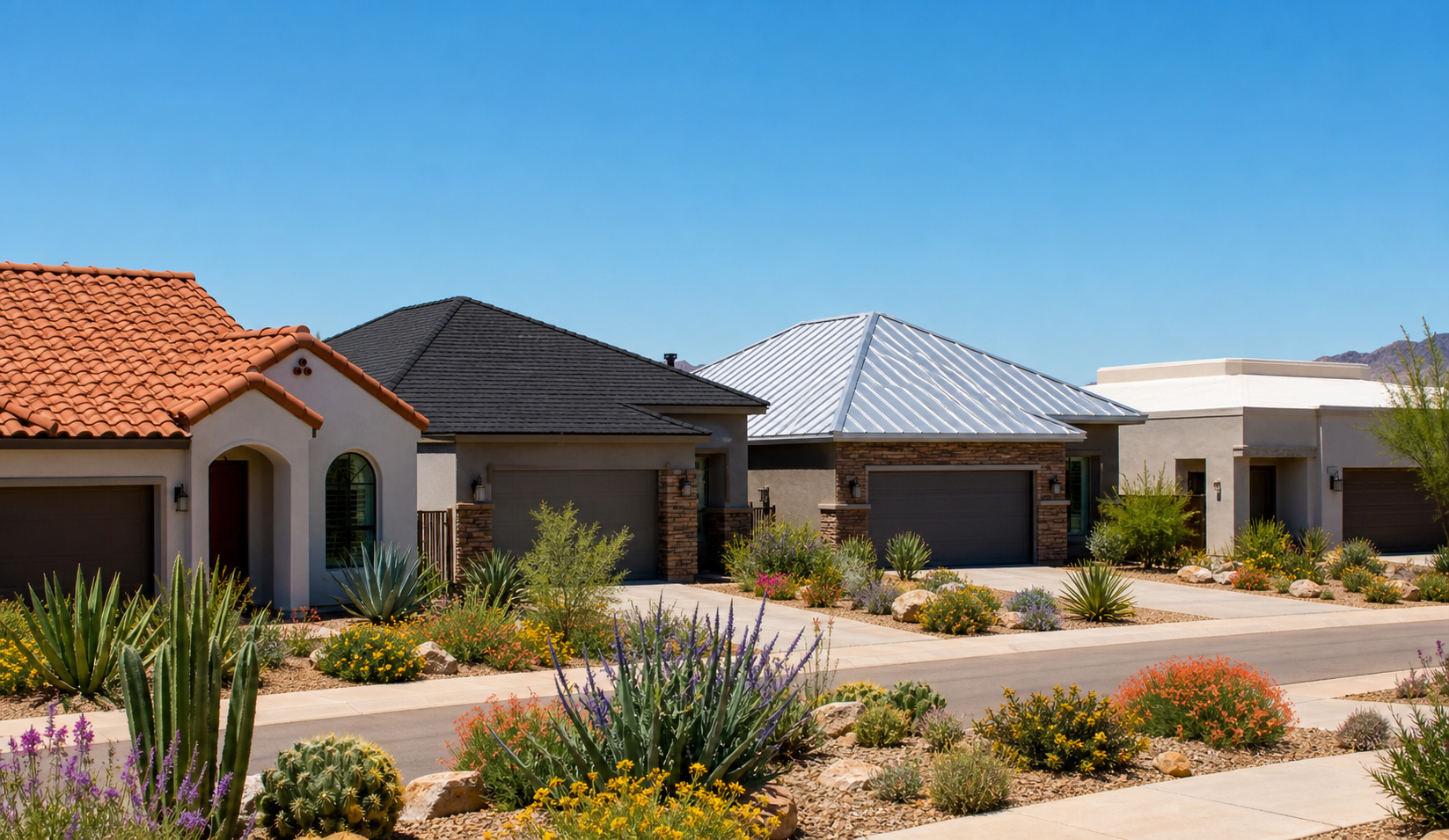
Arizona roofs deal with a combination of stressors most of the country doesn't face — sustained triple-digit heat, intense year-round UV exposure, and monsoon wind and hail, all in the same 12 months. The "best" material depends on your home, your budget, and which stressor matters most where you live, whether that's low desert heat in Phoenix and Scottsdale or elevation and snow in Flagstaff and Payson. Here's how the four most common options actually compare.
Tile roofing
Tile is one of the most popular choices across the Phoenix metro, and for good reason. It handles heat exceptionally well — the airflow underneath tile roofing helps keep attic temperatures down, which can meaningfully reduce cooling costs during Arizona summers. Tile is also highly UV-resistant and holds up for decades when installed and maintained properly.
The trade-off is fragility to impact. Hail and falling debris can crack or chip individual tiles, though the good news is that damaged tiles can usually be replaced individually rather than requiring a full roof replacement.
Best for: Homeowners prioritizing energy efficiency and long-term durability in low-desert heat.
Asphalt shingle roofing
Shingle roofing remains a popular, budget-friendly option throughout Arizona, including in higher-elevation areas like Prescott and Flagstaff. Modern shingle products have improved significantly in heat and impact resistance compared to older generations, and manufacturer warranties (including GAF's System Plus Warranty, which we install under) offer strong long-term protection.
The trade-off is that shingles generally have a shorter lifespan than tile or metal in Arizona's intense sun — most asphalt shingle roofs last 20-25 years here, compared to longer spans for tile or metal.
Best for: Homeowners looking for a reliable, cost-effective option with strong manufacturer warranty backing.
Metal roofing
Metal roofing performs well across nearly every Arizona climate zone, from desert heat to the snow load conditions in Show Low and Payson. It reflects heat rather than absorbing it, which helps with cooling costs, and it's highly resistant to wind — a real advantage during monsoon season. In higher elevations, metal also sheds snow effectively rather than letting it accumulate.
The trade-off is upfront cost, which tends to run higher than shingle, and the potential for dents from hail, though metal typically holds up to hail better than most other materials.
Best for: Homeowners in higher-elevation areas dealing with snow, or anyone prioritizing long-term durability and reflective heat performance.
Foam roofing
Foam roofing (spray polyurethane foam) is common on flat or low-slope roofs, particularly for commercial buildings and some residential homes with flat roof sections. It offers excellent insulation value and seamless water resistance when properly maintained, since there are no seams or joints for water to work into.
The trade-off is that foam roofing requires more regular maintenance and periodic recoating to stay effective, and it's more vulnerable to punctures from foot traffic or debris than the other materials on this list.
Best for: Flat or low-slope roofs, especially commercial buildings, where insulation performance and seamless coverage matter most.
Maintenance requirements by material
Material performance is only half the picture — how much upkeep a roof needs over time matters just as much for Arizona homeowners.
Tile requires the least routine maintenance of the four. Occasional inspections to check for cracked or shifted tiles, along with keeping debris out of valleys, is usually enough to keep a tile roof performing well for decades.
Shingle roofs benefit from periodic inspections, especially after monsoon storms, to catch granule loss or curling shingles before they turn into leaks. Because shingle has a shorter overall lifespan than tile or metal in Arizona's climate, staying ahead of small issues matters more here than with longer-lived materials.
Metal roofing is largely low-maintenance once installed, though fasteners and seams should be checked periodically to make sure nothing has loosened from thermal expansion and contraction — something Arizona's extreme daily temperature swings make more relevant here than in milder climates.
Foam roofing is the most maintenance-intensive of the group. It typically needs a fresh recoat every several years to maintain its water resistance, and skipping that maintenance is one of the most common ways a foam roof fails prematurely.
Cost considerations
Upfront cost varies meaningfully across these four materials, and it's one of the biggest factors homeowners weigh alongside performance. Asphalt shingle is generally the most budget-friendly option to install, which is part of why it remains so common across Arizona despite a shorter lifespan than tile or metal. Tile and metal both carry a higher upfront cost, but that's offset over time by longer lifespans and, in tile's case, potential energy savings from better heat performance. Foam roofing costs depend heavily on the size and complexity of the roof, plus the ongoing recoating costs that come with it.
The right way to think about cost isn't just the installation price — it's cost weighed against expected lifespan and maintenance needs over time. A higher price tag on a longer-lasting material can end up being the more economical choice compared to a cheaper option that needs replacing sooner.
So which one is right for your home?
In the low desert (Phoenix, Scottsdale, Mesa), tile and metal both handle heat well, with tile the more traditional choice and metal offering stronger monsoon wind resistance. At higher elevation (Flagstaff, Prescott, Payson, Show Low), metal's snow-shedding ability and shingle's cost-effectiveness are both worth weighing. On flat or low-slope commercial sections, foam is usually the most practical option regardless of location.
The honest answer is that there's rarely a single "best" material — there's a best material for your specific roof, budget, and priorities. A professional inspection and consultation is the fastest way to get a straight answer for your situation.
FAQ: Choosing a Roofing Material in Arizona
What is the best roofing material for Arizona's heat? Tile and metal both perform well against sustained heat and UV exposure, with tile offering natural airflow benefits and metal reflecting heat rather than absorbing it. Both tend to outlast asphalt shingle roofs in Arizona's climate.
Is tile or shingle roofing better for a Phoenix home? Tile generally offers better heat resistance and a longer lifespan, while shingle is more budget-friendly upfront with strong manufacturer warranty options. The right choice depends on your budget and how long you plan to stay in the home.
Does metal roofing work well in Arizona? Yes. Metal roofing reflects heat, resists wind well during monsoon season, and sheds snow effectively in higher-elevation areas like Flagstaff and Payson, making it a strong option across most of Arizona's climate zones.
When does foam roofing make sense in Arizona? Foam roofing is best suited to flat or low-slope roofs, particularly on commercial buildings, where its seamless water resistance and insulation value are the biggest advantages.
How long do different roofing materials last in Arizona? Asphalt shingle roofs typically last 20-25 years in Arizona's climate, while tile and metal roofs generally last longer with proper maintenance. Foam roofing lifespan depends heavily on maintenance and periodic recoating.
Not sure which roofing material is right for your home? Paragon Contracting offers free consultations across Arizona to help you choose the right fit for your budget, climate, and roof type.