
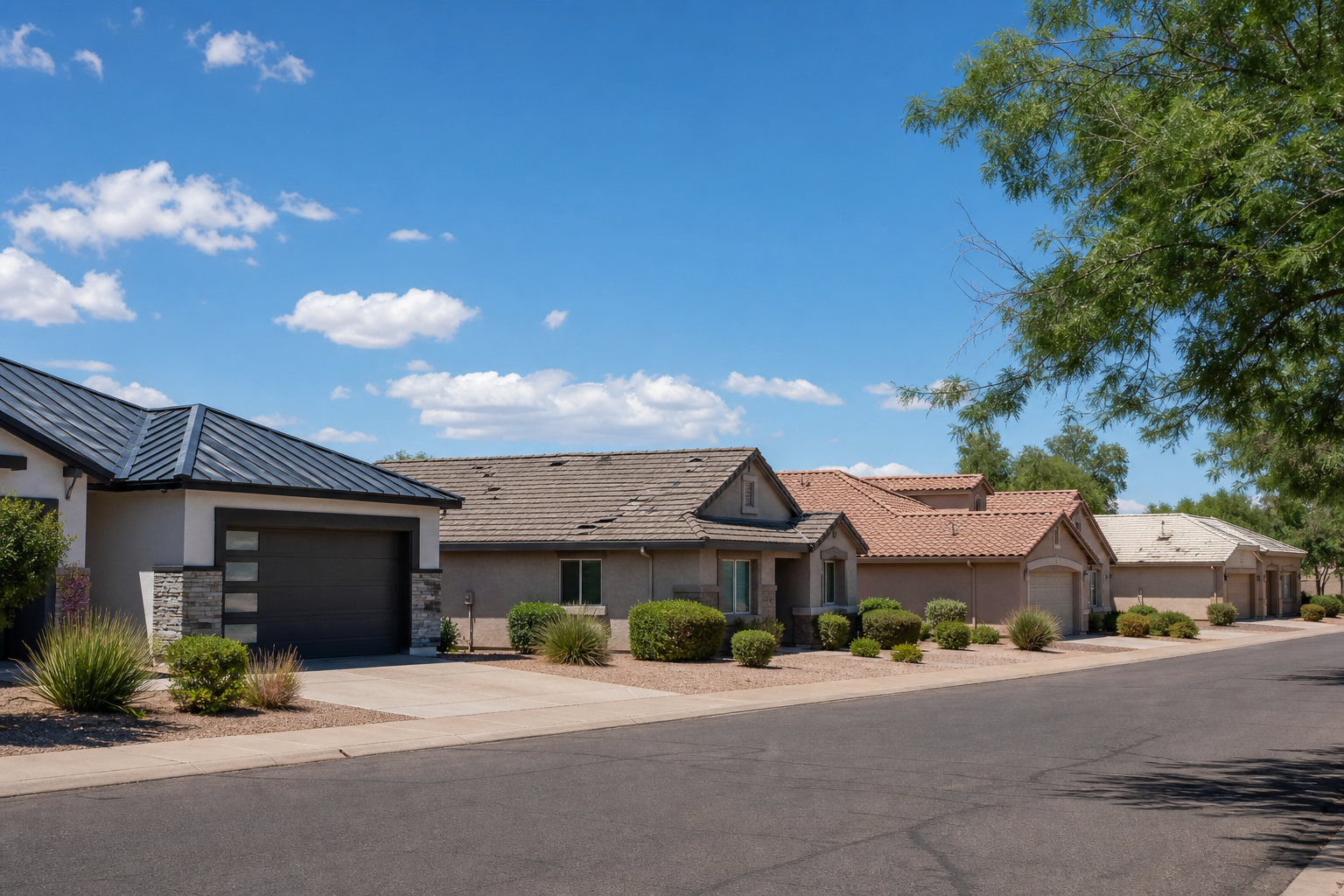
 Monsoon season means hail is back on the radar for Arizona homeowners, and one thing becomes obvious every year: some roofs come through a hailstorm with barely a mark, while a neighbor's roof a few doors down ends up needing repairs. The weather is the same. The outcome isn't. A lot of that difference comes down to two factors homeowners don't always think about — how old the roof is, and what it's made of.
Why roof age matters more than most people realize
A brand-new roof and a 20-year-old roof can take the exact same hailstorm and come away with very different results, even if they're made of the same material.
As roofing materials age, they naturally lose flexibility. Asphalt shingles dry out and become more brittle over time from years of Arizona sun exposure, which means they're more likely to crack or fracture on impact rather than absorb it. Tile becomes more prone to hairline cracking as the material weathers, especially in tiles that already have minor sun damage or prior stress. Even metal roofing, generally the most impact-resistant option, can be more vulnerable to denting if underlying support structures have degraded over time.
This is part of why two homes hit by the same storm can have completely different outcomes — the newer roof next door isn't necessarily better material, it's just had less time to become brittle.
How each material actually holds up to hail
Asphalt shingles — Newer shingle products, including Class 4 impact-resistant shingles, are built specifically to absorb hail impact rather than crack. Older, standard shingles without impact-resistant rating are the most common material we see with visible hail damage after a storm.
Tile roofing — Tile handles heat and UV extremely well, but it's more brittle than other materials when it comes to direct impact. Larger hail can crack or chip tile regardless of age, though older, more weathered tile is more susceptible to damage from smaller hail that a newer tile might shrug off.
Metal roofing — Metal is generally the most hail-resistant material available, and higher-gauge metal panels resist denting even in significant hailstorms. Lighter-gauge or older metal roofing is more prone to dents, though metal rarely fails structurally from hail the way shingle or tile can crack.
Foam roofing — Age matters differently here. Foam roofing depends on regular recoating to stay resilient — a well-maintained foam roof holds up to hail reasonably well, while a foam roof that's overdue for recoating is significantly more vulnerable to bruising and punctures.
Does upgrading materials actually reduce your risk?
If you're due for a roof replacement anyway, or you've had repeated hail damage over the years, it's a fair question. The short answer is yes, to a meaningful degree. Impact-resistant shingle products, higher-gauge metal, and well-maintained tile all measurably outperform their older or lower-grade counterparts in hail events. Some insurance providers even offer premium discounts for impact-resistant roofing materials, since it reduces their claim risk too.
That said, no roofing material is entirely hail-proof. Even the most resistant options can sustain damage in a severe enough storm — the goal with material selection is reducing risk and extending the roof's lifespan, not eliminating risk altogether.
Signs your roof's age may already be increasing your risk
You don't need to know the exact age of your roof to get a sense of whether it's more vulnerable than it used to be. A few warning signs to watch for, independent of any specific storm:
- Shingles that feel stiff or brittle, or that have started curling at the edges — a sign the material has lost the flexibility it had when new
- Tile that looks faded, chalky, or has visible surface erosion — often an early indicator of the kind of weathering that makes tile more prone to cracking
- Rust spots or visible wear on metal roofing or flashing — a sign the protective coating has started to break down
- A foam roof that's visibly discolored, chalky, or hasn't been recoated in several years — a strong sign it's overdue for maintenance and more vulnerable than it should be
None of these signs mean a roof is about to fail, but they're useful indicators that age has started working against the material's ability to handle impact, which is exactly the kind of thing worth knowing before a storm rather than after.
Paragon Contracting offers free Roof Inspections to ensure that you have a roof which will be able to withstand storms as well as possible
What this means for monsoon season
If your roof is getting older, or you're not sure what material or grade it's built with, this is a good time of year to find out — before the next storm, not after. A quick inspection can tell you where your roof actually stands, whether that's confirming it's in good shape for another season or catching age-related vulnerability before it turns into a bigger problem.
A few practical steps worth taking heading into peak monsoon activity:
- Find out what your roof is made of and roughly how old it is, if you don't already know — often available from home purchase records or a quick inspection.
- Check for the warning signs above from the ground, keeping in mind a full picture usually requires a professional look.
- If you've had repeated hail damage in past seasons, treat that as a signal your current material may be under-performing — worth discussing options at your next repair.
- Ask about impact-resistant options if you're due for a repair or replacement before storms pick up, rather than waiting until after the next hit.
None of this guarantees a stormproof roof — nothing does — but it puts you in a stronger position heading into Arizona's peak hail months.
FAQ: Roof Age, Material, and Hail Damage Risk
Does an older roof get damaged by hail more easily than a new one? Generally, yes. Materials become more brittle with age and years of UV exposure, which makes them more likely to crack or fracture on impact rather than absorb it, even in the same storm that a newer roof might handle without damage.
What roofing material holds up best to hail in Arizona? Metal roofing, particularly higher-gauge panels, is generally the most hail-resistant option. Impact-resistant (Class 4) asphalt shingles are also built specifically to handle hail better than standard shingles.
Does upgrading to impact-resistant materials actually reduce hail damage risk? Yes, measurably. Impact-resistant shingles, higher-gauge metal, and well-maintained tile all perform better in hail events than older or lower-grade materials, and some insurers offer discounts for impact-resistant roofing.
Is any roofing material completely hail-proof? No. Even the most hail-resistant materials can sustain damage in a severe enough storm — better materials reduce risk and extend roof lifespan, but they don't eliminate risk entirely.
How do I know if my roof's age or material puts it at higher hail risk this monsoon season? A professional inspection is the most reliable way to find out. It can confirm your roof's condition and material grade before the next storm, rather than after damage has already occurred.
Not sure how your roof's age or material stacks up heading into monsoon season? Paragon Contracting offers free inspections across Arizona.